
Apple opens US research programme to test how people interpret health AI answers
Apple and OpenEvidence have launched a US research study that will examine how up to 200,000 adults use conversational health AI, assess its answers and understand clinical information.
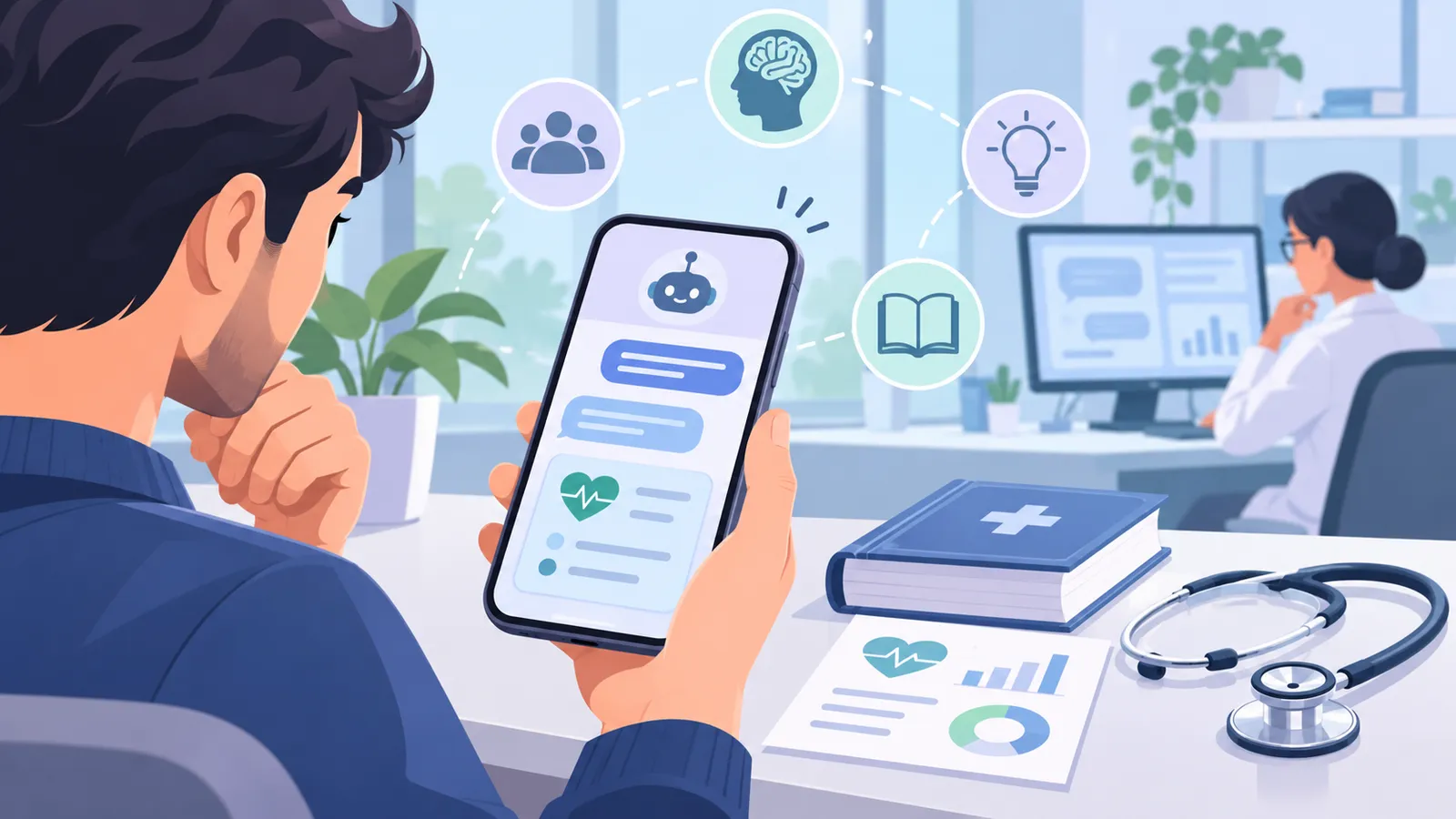
Apple has launched a United States research study to examine how people use conversational artificial intelligence for health questions, with a focus on trust, comprehension and the quality of the responses they receive. Announced on November 15, the Apple Health AI Usage Study is being conducted with OpenEvidence, a clinical AI platform that provides answers supported by medical literature.
The study uses a dedicated iPhone app rather than introducing a general health chatbot into Apple's Health app or Siri. Participants can ask everyday health questions, read explanations in accessible language and open links to peer-reviewed clinical references behind the responses. Apple says the research is intended to help understand how people engage with health AI and how such tools can be designed more responsibly.
What the study is designed to measure
Apple says researchers will examine what makes users trust an AI-generated health answer, how well they understand the information and how they respond after reading it. The study will also look at the quality of responses and whether conversational tools can help people prepare for appointments with their own clinicians.
The collaboration combines an Apple-designed research experience with OpenEvidence's clinical AI technology. Apple says the platform draws on established medical sources, including The New England Journal of Medicine, the Journal of the American Medical Association and Nature. Showing citations is intended to make the basis of an answer more visible, although a citation does not automatically make every generated explanation correct or complete.
Consumer-facing AI systems can produce information that is unclear, incomplete or inappropriate for a particular situation. The study is designed to gather evidence about how users interpret such responses and whether they can recognise when a question needs professional attention.
Who can take part
Apple says the study is open to as many as 200,000 eligible participants aged 21 and older across the United States. Participants need an Apple Intelligence-enabled iPhone, which the company defines as an iPhone 15 Pro or later, running iOS 26 or later. People outside the United States or using older devices are not included in the stated eligibility criteria.
Participants can choose whether to share selected HealthKit information, such as resting heart rate, activity, sleep or lab results. Apple says this sharing is optional and is intended to help researchers examine whether personal context affects the relevance and understanding of AI responses. Participants also retain control over whether to share survey responses.
Privacy and clinical limits
Apple says study data will not be used to train AI models. The company says the research app was designed with privacy protections, transparency and clinical guardrails. It also says the app is intended to detect certain concerning questions and direct participants towards a healthcare provider or other resources when appropriate.
These safeguards are important because health information can be highly personal and because a conversational system may not have the full context needed to interpret a symptom or medical history. Optional HealthKit sharing also means participants can decide whether they want personal metrics included in the research experience.
Apple's disclaimer is explicit: the study app is not meant to diagnose or treat a condition and does not replace advice from a medical professional. People should consult a doctor or clinician about health concerns or to verify medical information. The app is a research tool, not a clinical service.
Why companies are studying health AI
People are increasingly encountering AI-generated information in search tools, chatbots and digital services. Health questions are a particularly sensitive use case because users may be worried, may not know which sources to trust and may act on information before speaking with a clinician.
For technology companies, understanding how users interpret medical information is a necessary part of building safer products. The study may help identify which formats, citations and explanations make health information easier to understand. It may also reveal when users need clearer warnings or a stronger prompt to seek professional care.
The research does not establish that AI answers are clinically equivalent to advice from a doctor. It is designed to investigate how people use and understand the tools, not to prove that a chatbot can replace medical assessment.
What happens next
Apple has not announced a public timetable for results or said that the study will lead to a specific consumer product feature. The first step is to recruit participants and observe how they interact with the app. Findings will need to be analysed and interpreted before they can inform future design decisions.
The study gives Apple and OpenEvidence a structured way to examine a fast-moving area of health technology. Its value will depend on whether the research produces useful evidence about trust, comprehension and safe use, and whether those lessons lead to clearer, more reliable experiences for people seeking health information.
Sources
Related stories
Apple opens US study to examine how people understand and trust health AI
Apple and OpenEvidence have launched a US research study that will examine how up to 200,000 adults use conversational health AI, assess its answers and understand clinical information.

ICMR Turns a Century of Health Research Innovations Into Industry Partnerships
The Indian Council of Medical Research says it has completed 100 technology-transfer deals in under two years. At its November research summit, it exchanged 20 licensing agreements covering eight technologies with nine Indian companies and unveiled new research, surveillance and training initiatives.
India Proposes Stronger Controls for Medicine Storage and Distribution
The Health Ministry has proposed bringing Good Storage and Distribution Practices into the Drugs Rules, aiming to improve traceability and protect medicines as they move through the supply chain.

US loses measles elimination status after 26 years
The Pan American Health Organization has ruled measles endemic again in the United States, Mexico and Bolivia, after a year of continuous spread and the country's worst outbreak in decades.