
Bengaluru polytechnic opens hands-on centre for AI and emerging technologies
CGI and Learning Links Foundation have opened an AI and Innovation Centre at MEI Polytechnic College, designed to give more than 1,250 students practical experience with emerging technologies.
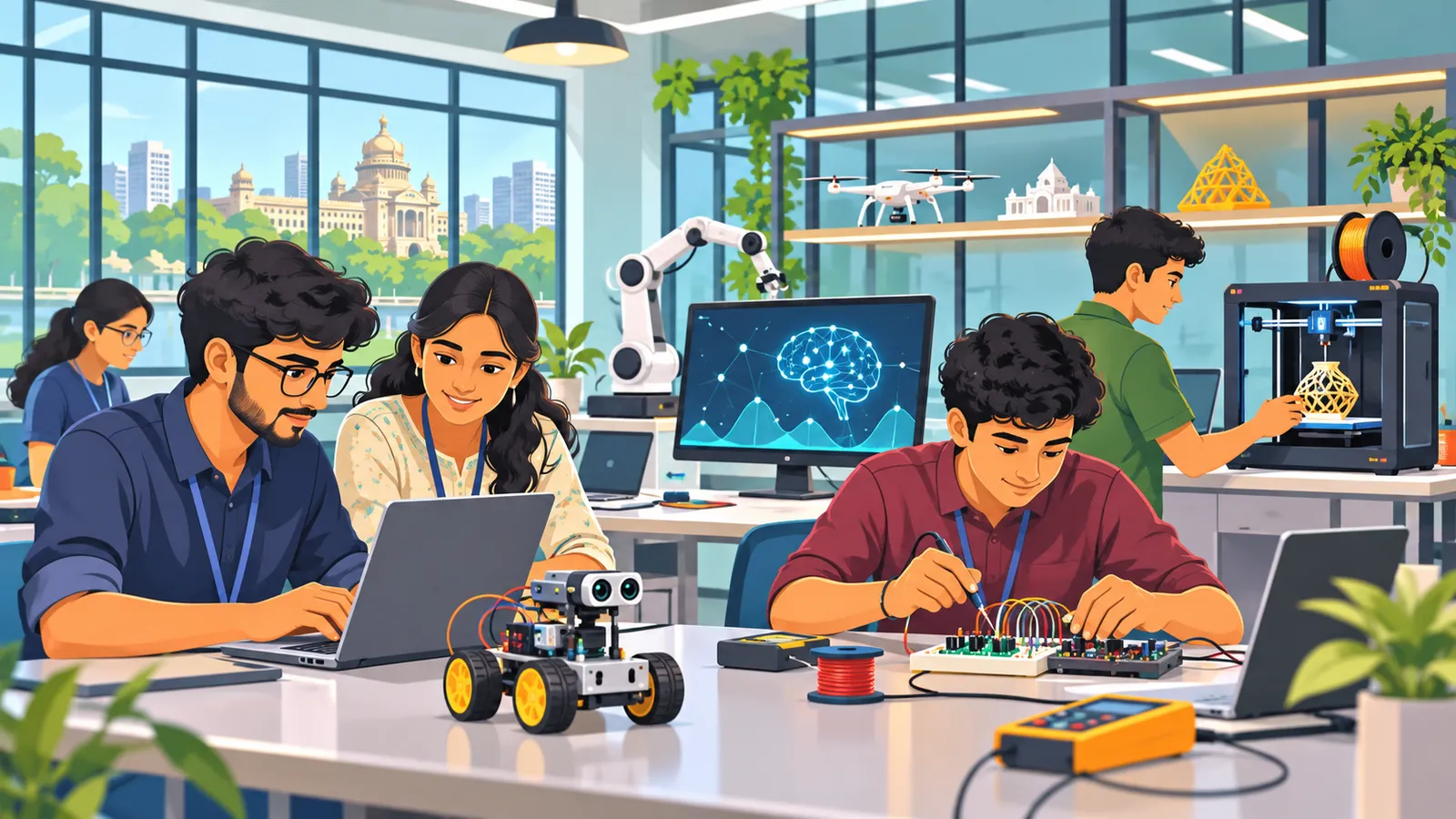
MEI Polytechnic College in Bengaluru has opened a Centre of Excellence for Artificial Intelligence and Innovation in a partnership involving technology company CGI and Learning Links Foundation. The centre, inaugurated on November 20, is designed to give more than 1,250 students practical experience with artificial intelligence and other emerging technologies.
The facility is intended to complement classroom learning with project-based work. Its areas include AI, the Internet of Things, robotics, 3D design and printing, electronics and digital fabrication. Students will be able to use development boards, sensors, embedded systems, robotic platforms and prototyping equipment to build and test ideas.
From theory to practical projects
Technical courses often teach the principles behind programming, electronics and engineering before students have the opportunity to apply them to a complete project. A dedicated centre can help bridge that gap by giving learners access to equipment and structured activities where they can experiment, identify problems and refine a working model.
At the new centre, students are expected to take part in technical challenges and innovation activities. These could involve connecting sensors, programming a device, building a prototype or exploring how software and hardware work together. The emphasis is on learning by doing rather than treating emerging technologies only as topics in a textbook.
CGI said it designed, funded and strategically planned the facility in collaboration with Learning Links Foundation and MEI Polytechnic College. The partners have described the initiative as a way to improve access to technology learning and help students develop practical problem-solving skills.
More than artificial intelligence
Although AI is in the centre's name, the planned learning areas extend beyond software models. Internet of Things projects can connect sensors and devices so that they collect and exchange information. Robotics combines mechanical systems, electronics and programming. Three-dimensional design and printing can help students turn digital models into physical prototypes, while electronics and digital fabrication provide the tools needed to build and test components.
That mix is relevant because many real-world technology projects combine several disciplines. A connected device, for example, may need a sensor, a circuit, embedded software and a way to communicate with another system. Students who can work across those areas may be better prepared to understand how products are developed and maintained.
The centre's equipment is expected to support experimentation and prototyping, but access to tools alone does not guarantee learning outcomes. The value will depend on the quality of instruction, the time students can spend on projects and whether activities are linked to their courses and career goals.
Industry and education partnerships
CGI's involvement connects the initiative with an employer in the technology and consulting sector. Learning Links Foundation works on education and development programmes, while MEI Polytechnic provides the institutional setting and student community. The partners say the collaboration will allow students to explore emerging technologies in a practical environment.
Industry-linked learning centres can give colleges access to equipment and exposure to current technical practices. They can also help companies support local education ecosystems and identify future talent. For students, the most useful outcomes are likely to be demonstrable projects, teamwork experience and the ability to explain how they approached a technical problem.
However, the opening announcement does not provide a detailed timetable of courses, the number of students who will use the facility in each semester or a list of industry placements that will follow. The figure of more than 1,250 students describes the potential reach identified by the partners, not a count of students who have already completed training.
What will show whether the centre succeeds
Useful indicators will include how many students participate, the range of projects completed, the quality of mentoring and whether the facility becomes part of regular coursework. It will also be important to ensure that access is broad across departments and that students with different levels of experience can take part.
The centre gives MEI Polytechnic a dedicated space for practical work in AI and related technologies. Its longer-term value will depend on how consistently students use the equipment, how well the activities connect with their studies and whether the skills gained help them move into further education or employment.
Sources
Related stories

The secret of a good teacher
Teachers need to trust their students with knowledge and let them outshine the generation that taught them
Why legal education must teach students how to explain law to common people
Law is one area where speech and writing can directly translate into action; words do not simply describe but simultaneously create reality.

Bar Council asks law students to verify college approval, affiliation before admission
The advisory, issued on Supreme Court order, also warns institutions against making misleading claims about their approval status, sanctioned student intake, and eligibility to impart professional legal education
Cognizant opens Chennai learning hub as it scales its AI-skilled workforce
Cognizant has opened the first phase of a 165,000-square-foot learning centre at its Siruseri campus, adding classrooms and collaborative spaces as the company expands training for AI-related roles.