
Gwalior Telecom Zone Secures Interest from 25 Firms as Expansion Moves Ahead
The Centre and Madhya Pradesh have issued letters of intent to 25 companies for Gwalior’s proposed telecom manufacturing cluster and announced a second phase, as the project seeks to attract investment in equipment, components and related technology.
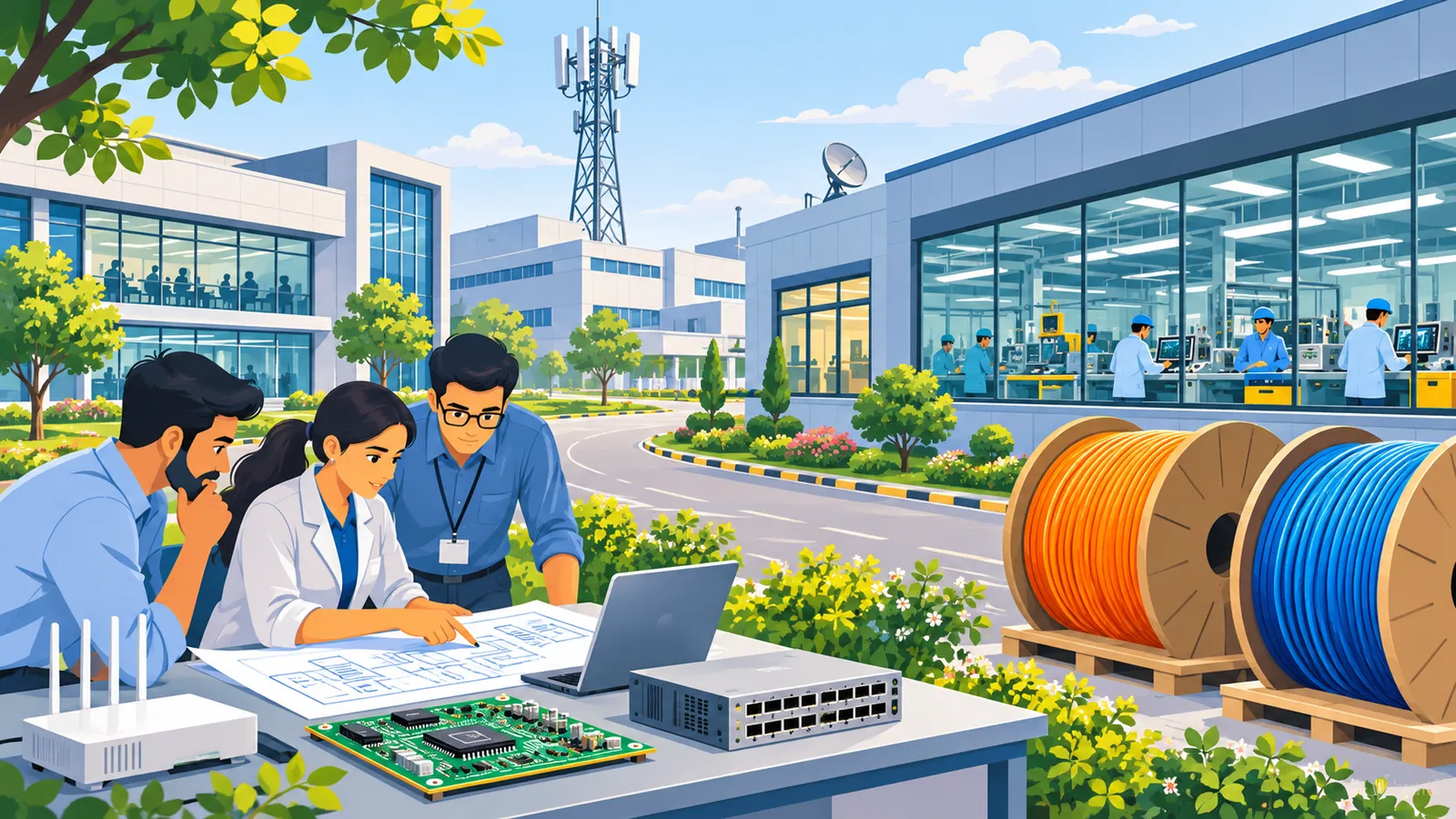
Gwalior’s proposed telecom manufacturing cluster has moved another step towards implementation, with the Centre and the Madhya Pradesh government issuing letters of intent to 25 companies interested in investing in the project. The announcement was made at a ceremony in Bhopal on 19 November, where officials also outlined a second phase for the zone.
The Department of Telecommunications (DoT), working with the Madhya Pradesh government, said the initiative is intended to build a domestic ecosystem for telecom equipment, components, optical fibre, software and passive infrastructure. The first phase covers about 170 acres in Gwalior, according to the government’s announcement.
What the latest announcement means
The letters of intent mark a formal step for prospective investors, but they should not be read as proof that all proposed factories are already under construction or operating. The government described the ceremony as a milestone in moving investor interest towards manufacturing activity. The announcement also included the start of planning for Phase II, signalling that the state and the Centre want to expand the project beyond its initial footprint.
Business Standard reported on 19 November that the 25 companies’ proposals represented more than ₹3,600 crore in investment interest and that the second phase was planned across approximately 450.45 acres. It also reported an expectation of more than 15,000 jobs linked to the proposals. These are reported proposals and projected employment figures, not completed investment or jobs already created.
What the zone is designed to produce
The proposed cluster is intended to bring several parts of the telecom supply chain closer together. The government lists telecom equipment, components, optical fibre, software and passive infrastructure among the areas that could be served by the zone. It is also described as a location for manufacturing, research and development, and innovation.
Such a cluster could offer suppliers and manufacturers a shared industrial base, while giving firms a route to work with research, testing and other technical facilities. The practical value will depend on the companies that ultimately take up land, the facilities that are built and whether production plans move from proposals to execution.
Why domestic telecom manufacturing matters
India has built a large telecom services market, but the equipment and component supply chain is a separate industrial challenge. A manufacturing cluster can support domestic production if it attracts firms with viable products, reliable suppliers, skilled workers and access to customers. It may also create opportunities for smaller component makers and service providers around larger manufacturers.
The project’s focus on optical fibre and network equipment is relevant to the continuing expansion and upgrading of communications infrastructure. However, the announcement does not identify the 25 companies or provide a product-by-product breakdown of their plans. It also does not establish when individual factories will begin production.
What happens next
The next test is whether the letters of intent translate into land allotments, investment approvals, construction and operational facilities. The details of Phase II, including its development schedule and the companies that will participate, will also matter. Until those steps are completed, the project is best understood as an industrial development in progress rather than an established manufacturing hub.
For Gwalior, the proposed zone could widen the region’s industrial base. For India’s telecom sector, its significance will ultimately be measured by the equipment produced, the firms that become operational and the extent to which the cluster strengthens domestic supply chains.
Sources
Written with automated tools from the sources above and published without editor review. Spotted an error? Tell us · Corrections Policy
Related stories

Voltas and Atomberg sign agreement for an Indian air-conditioner compressor venture
Voltas and Atomberg Innovation have signed a joint venture agreement for room air-conditioner compressors, with equal planned ownership and a combined funding ceiling of ₹200 crore.

Zurich Plans to Make Hyderabad a 1,000-Person Technology and AI Base
Zurich Insurance Group plans to expand its Hyderabad capability centre to around 1,000 employees by mid-2028. The Swiss insurer says the India team will build technology, engineering, data and AI capabilities while supporting work on cyber and specialty insurance.

Export Mission Widens MSME Support With New Travel, Certification and Freight Rules
India has widened support under the Export Promotion Mission, raising the turnover ceiling for airfare reimbursement to ₹50 crore, expanding eligible certification support to 600 standards and extending freight assistance coverage to 34 States and Union Territories.
NLC India Renewables Files Draft Papers for ₹3,300 Crore IPO
NLC India Renewables has filed draft IPO papers proposing a fresh issue of up to ₹3,300 crore and an offer for sale of up to 10 crore shares by parent NLC India. The company plans to use ₹2,475 crore of fresh proceeds to repay or prepay borrowings.