
Digital pension verification drive crosses one crore certificates in 17 days
India's fifth nationwide Digital Life Certificate campaign passed one crore submissions by November 18, with more than 75 lakh certificates generated through face authentication.
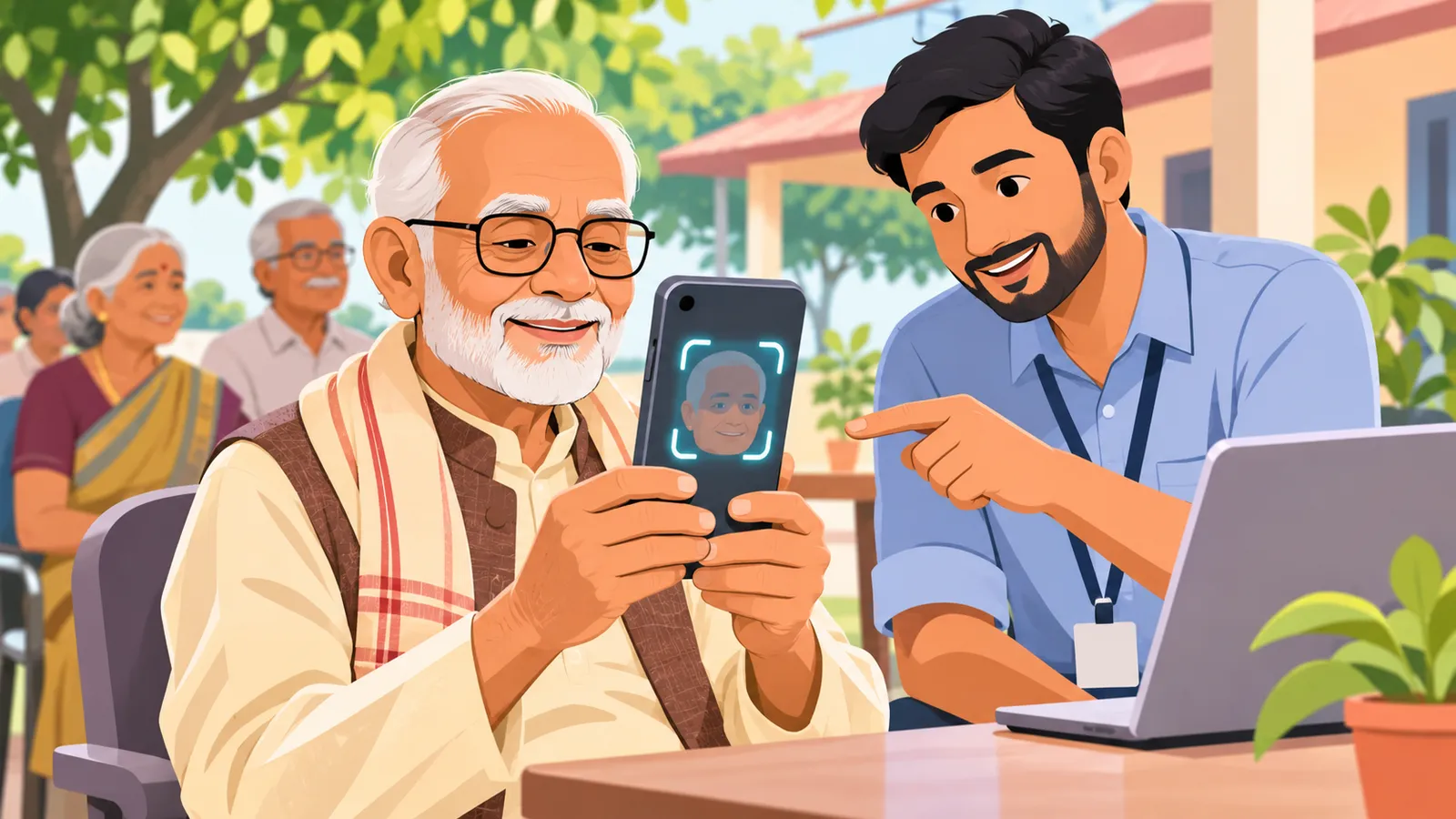
India's fifth nationwide Digital Life Certificate campaign crossed one crore submissions in its first 17 days, according to figures shared by Union Minister of State for Personnel Dr Jitendra Singh on November 18. More than 75 lakh of the certificates had been generated through Aadhaar-based face authentication, indicating how prominently smartphone-based verification has featured in this year's drive.
The campaign, known as Digital Life Certificate Campaign 5, is being conducted from November 1 to November 30 by the Department of Pension and Pensioners' Welfare. It is designed to help pensioners submit proof that they are alive without having to rely solely on a physical visit to a bank or pension office. The department's initial announcement set a nationwide target of 2.30 crore certificates, including 1.50 crore through face authentication.
How the campaign is organised
The government said the month-long exercise would cover around 2,000 cities and districts. It brings together pension-disbursing banks, India Post Payments Bank, district post offices, pensioners' welfare associations, the Unique Identification Authority of India, the Ministry of Electronics and Information Technology, Railways, the Employees' Provident Fund Organisation and defence accounts authorities.
The campaign is intended to combine digital access with assisted services. Pensioners who are comfortable using a compatible smartphone can generate a certificate through the Jeevan Pramaan process, while outreach teams and doorstep services are intended to help people who face mobility or access barriers. The department has also described health checks and Aadhaar-update support as part of the services being offered at some camps.
Face authentication uses a phone camera to verify a pensioner's identity against Aadhaar-linked records. The government has said the process is available on supported Android and iOS devices. It can reduce the need for a separate fingerprint reader, but successful use still depends on a compatible phone, a working app, an internet connection and the person's ability to complete the verification steps.
What the early numbers show
The one-crore milestone represents a little less than half of the campaign's 2.30-crore target. The more than 75 lakh face-authenticated certificates account for a large share of the submissions recorded by November 18. The figure suggests that the phone-based method has become a major route for pensioners who can use it, while other submission channels remain important for people who need assistance.
The campaign's total should not be read as a measure of the number of new pensioners enrolled. A Digital Life Certificate is a periodic verification document, and the same pensioner may submit a certificate as part of the annual process. The number therefore measures submissions during the campaign, not the size of the pensioner population or a count of newly added beneficiaries.
Why access and support still matter
Digital verification can make a routine administrative task more convenient, particularly for older people who live far from a branch or have difficulty travelling. However, a digital route does not remove the need for clear help when a device is incompatible, authentication fails or a person is unsure how personal information is being used. Assisted channels remain important to ensure that technology does not become a new barrier.
The department has said that the campaign is being supported by banks, post offices and government agencies across the country. The scale of that coordination matters because pensioners may interact with different institutions depending on where their pension is paid and where they live. Local camps can also provide an opportunity to resolve questions about certificates and related services.
The November 30 end date leaves the campaign in progress as the one-crore milestone is reached. The next figures to watch are the final number of certificates submitted, the share generated through face authentication and how many pensioners used doorstep or assisted services. Those results will help show whether the large-scale digital push has made annual verification easier while preserving access for people who need in-person support.
Sources
Related stories

SCO Opens Its First Civilisational Dialogue Forum in New Delhi
The Shanghai Cooperation Organisation's first Civilisational Dialogue Forum is scheduled to open at Delhi's Purana Qila on November 20, bringing together cultural representatives, diplomats and scholars for three days of discussions on shared heritage across the region.
US agencies speed up counter-drone push nationwide
Several US agencies signed a memo to evaluate and rapidly deploy counter-drone technology, the FAA said, as officials cite growing threats to airspace.
Trump calls Iran war 'effectively over'; Tehran disagrees
After meeting Qatar's prime minister, Trump said Iran's military is finished while keeping a naval blockade; Iranian officials dismissed his claims.
Landslide kills five displaced people in central Gaza
Four children and a woman died when a sandbank collapsed on a tent in Deir el-Balah after heavy rain, and Gaza authorities criticised global inaction.