
India and Sweden move LeadIT into an implementation-focused climate phase
LeadIT 3.0, launched at COP31, will shift the India-Sweden industrial transition initiative towards larger projects, investment mobilisation and practical support for heavy industry from 2027 to 2030.
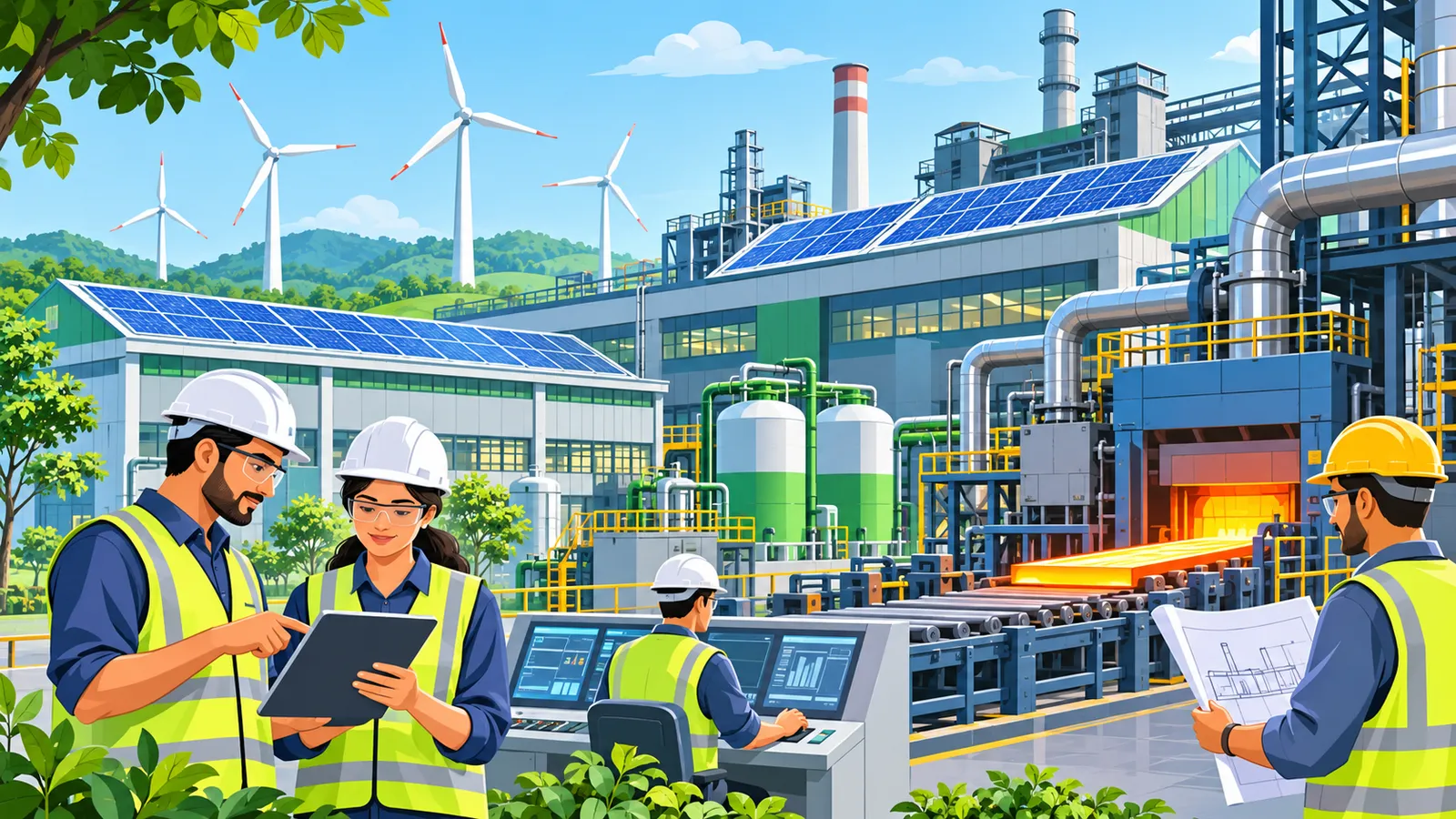
India and Sweden have launched the third phase of the Leadership Group for Industry Transition, known as LeadIT 3.0, at the United Nations climate conference COP31 in Antalya, Türkiye. Announced on November 17, the new phase will run from 2027 to 2030 and is intended to move the initiative from knowledge-sharing and dialogue towards larger-scale industrial projects.
LeadIT was launched by India and Sweden in 2019 to support the transition of energy-intensive industries. Its membership has grown to around 20 countries and more than 30 companies. India's Ministry of Environment, Forest and Climate Change said Brazil joined as the newest country member during the latest phase's launch, adding another participant from the Global South.
From discussion to project delivery
The third phase is designed to put more emphasis on implementation. The Swedish government said the platform will help mobilise technology, capital and knowledge to support industrial transition. India's environment ministry described the priorities as scaling industrial projects, mobilising capital and delivering tangible outcomes over the 2027–2030 period.
The focus reflects the difficulty of reducing emissions in sectors such as steel, cement and heavy transport. These industries rely on large facilities and long-lived equipment, and their production processes can be difficult to change quickly. Moving to lower-carbon methods may require new technologies, access to reliable energy, infrastructure upgrades and long-term financing.
LeadIT's earlier work has helped connect governments, companies and research institutions around potential solutions. The next stage is expected to support technology development and diffusion, help connect projects with finance and provide capacity-building and policy support. The initiative's members will need to turn those areas into specific projects that can be tested, funded and replicated.
Why heavy industry is central to climate plans
Steel, cement and transport are important to infrastructure and economic development, but their production and operation can generate substantial emissions. Lower-carbon industrial pathways may include cleaner energy, more efficient processes, alternative fuels, material substitution and, where suitable, carbon capture. The appropriate option varies by sector, plant design, local energy supply and the cost of available technology.
For developing economies, the transition also needs to account for jobs, energy access and the need to expand infrastructure. India has argued that industrial decarbonisation should be pursued alongside development priorities. That means projects must be practical for local conditions and should not assume that every country has the same financing capacity or access to technology.
LeadIT provides a forum for sharing experience and building partnerships, but it does not itself guarantee that a project will receive funding or reach commercial scale. Companies and governments will still need to make investment decisions, complete technical assessments and meet relevant regulatory requirements.
India and Sweden's partnership
The initiative is part of a wider India-Sweden relationship that includes cooperation on climate policy, technology and industrial development. Both governments have supported LeadIT since its launch in 2019, and their latest agreement gives the platform a renewed mandate for the next four years.
Sweden's announcement highlighted the role of capital and risk reduction in making industrial projects commercially viable. India's ministry also stressed the need to move from feasibility studies towards pilots, demonstrations and replication. These are important steps because a promising technology does not automatically become a widely used industrial process.
What to watch between 2027 and 2030
The success of LeadIT 3.0 will depend on the projects it helps advance and whether those projects can demonstrate measurable progress. Useful indicators will include the number of pilots launched, the amount of capital mobilised, the participation of industrial companies and the extent to which successful approaches are adopted by other plants or countries.
The launch establishes the new phase and its priorities; it does not announce a list of completed projects or a fixed funding pool. The next step will be to identify projects with clear technical plans, credible financing and measurable emissions outcomes. If the platform can help turn international cooperation into investment decisions on the ground, LeadIT 3.0 could give industrial decarbonisation a more practical role in climate action.
Sources
Related stories
APEC Leaders Set Out Shenzhen Priorities for Trade and Supply Chains
The 21 APEC economies have agreed on a Shenzhen outcome framework focused on resilient supply chains, digital trade, connectivity and innovation, as regional governments seek steadier growth amid economic uncertainty.

Antalya Climate Negotiations Hit New Divide Over Fossil Fuels and Funding
A revised COP31 text has removed direct references to fossil fuels and a proposed $120 billion adaptation-finance figure, highlighting unresolved disputes as the UN climate summit approaches its scheduled close.
India and Japan Expand Defence, Cybersecurity and AI Cooperation After Tokyo Talks
India and Japan have agreed to deepen defence exercises, maritime coordination, cybersecurity and AI collaboration after their fourth foreign and defence ministers’ 2+2 meeting in Tokyo on November 19.

Musk, by video from China, says he regrets his midterm spending
Speaking at the NYT DealBook Summit, Elon Musk said he felt foolish about his campaign donations and rejected the MAGA label, after a Democratic sweep in the midterms.