
India Prepares to Unveil Indigenous H5N1 Vaccine for Chickens
India is set to dedicate its first home-developed inactivated H5N1 vaccine for chickens on November 20. Developed by ICAR-NIHSAD in Bhopal, it targets the Clade 2.3.2.1a strain linked to many poultry outbreaks.
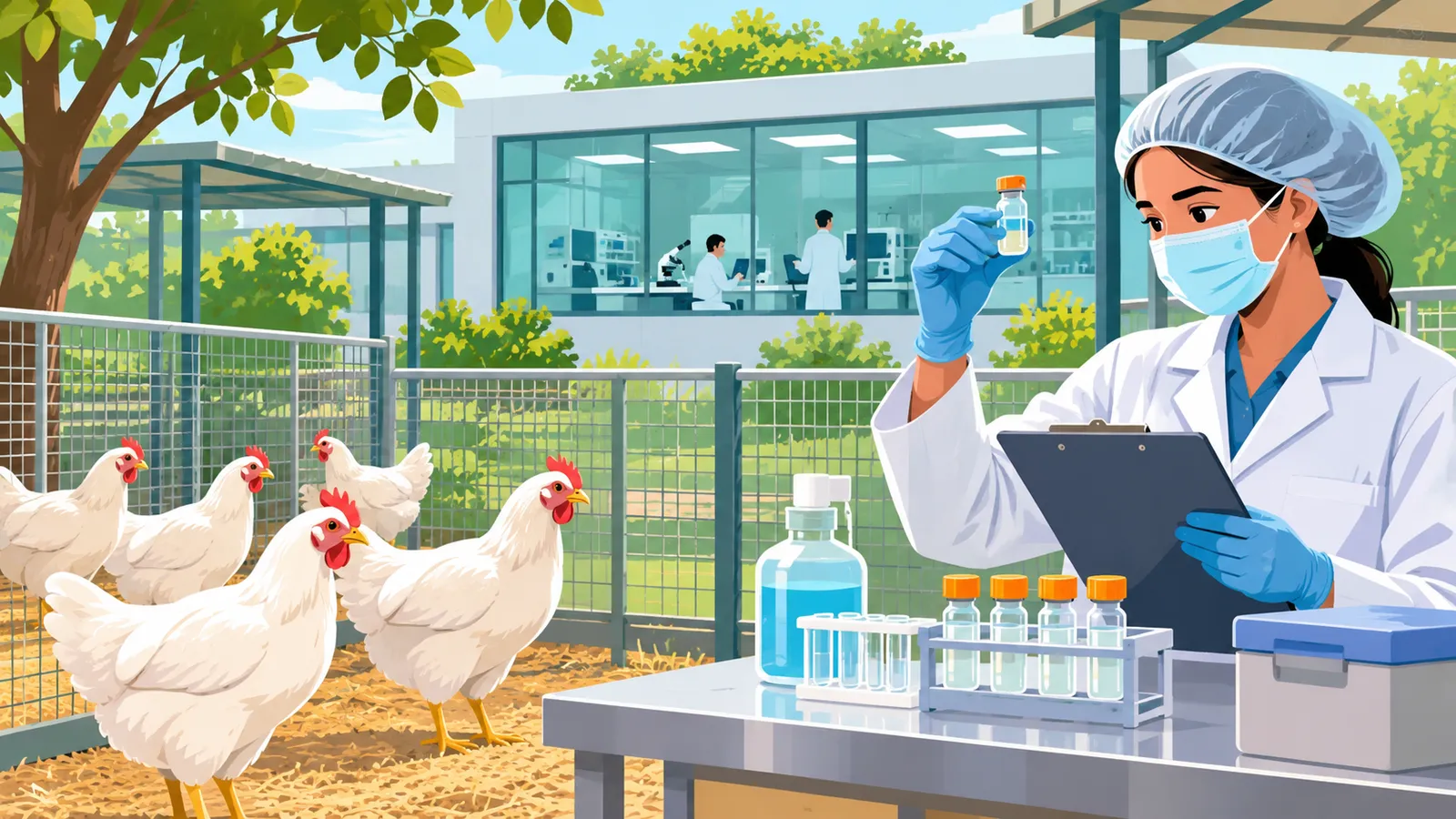
India is preparing to dedicate its first indigenous vaccine designed to protect chickens against a major strain of H5N1 avian influenza, marking a new step in the country's efforts to strengthen poultry disease control. The inactivated vaccine was developed by scientists at the Indian Council of Agricultural Research–National Institute of High Security Animal Diseases (ICAR-NIHSAD) in Bhopal.
The Ministry of Agriculture and Farmers Welfare said Union Agriculture Minister Shivraj Singh Chouhan is scheduled to dedicate the vaccine to the nation on November 20, 2026, at ICAR-NIHSAD. The formulation targets H5N1 highly pathogenic avian influenza, or HPAI, belonging to Clade 2.3.2.1a.
Why the vaccine matters
Avian influenza, commonly called bird flu, can spread rapidly among poultry and cause severe losses for farmers. Outbreak responses can involve the culling of affected birds and restrictions on the movement and trade of poultry products. These measures can disrupt farm operations, supply chains and livelihoods, particularly in areas where poultry production is an important source of income.
The government said more than 500 combined outbreaks involving H5N1 and H5N8 have been reported in India since the disease was first detected in the country in 2006. It also cited the economic damage associated with earlier outbreaks, including estimated direct and indirect losses of Rs 2,200 crore to Rs 3,000 crore during the 2006 episode.
Targeting a strain linked to poultry outbreaks
The vaccine has been developed specifically against H5N1 Clade 2.3.2.1a. According to the ministry's announcement, studies have identified this clade as responsible for most H5N1 outbreaks in chickens. The same announcement notes that infections involving the strain have also been detected in other animal species, including mammals.
The development is significant because the government said no specific commercial vaccine was available against this particular H5N1 clade. A vaccine developed by a domestic research institute could give India an additional tool to strengthen its response to the strain circulating in the country.
What is known about the rollout
The November 20 programme is described by the ministry as a dedication of the vaccine to the nation. The announcement identifies the developer, target virus clade and intended use in chickens. It does not, however, provide a nationwide vaccination timetable, commercial supply details, pricing information or a schedule for distribution to poultry farms.
Those operational details will matter in determining how quickly the research achievement can translate into practical protection for poultry producers. Veterinary authorities and the poultry sector will need clear guidance on eligible flocks, administration, monitoring and the role of vaccination alongside existing biosecurity and surveillance measures.
A domestic research milestone for poultry health
The development adds to India's effort to build domestic capabilities in animal-health research and veterinary biological products. For poultry farmers, the potential value will depend not only on the vaccine's development but also on its availability, deployment and effectiveness under field conditions.
For now, the confirmed announcement is that ICAR-NIHSAD has developed an inactivated vaccine targeting H5N1 Clade 2.3.2.1a and that the Union Agriculture Minister is scheduled to dedicate it at the Bhopal institute on November 20. Further information about rollout and field use will be important to watch after the event.
Sources
Written with automated tools from the sources above and published without editor review. Spotted an error? Tell us · Corrections Policy
Related stories

India and EU finish Horizon Europe talks, opening a path to direct research funding
India and the European Union have concluded negotiations on India's association with Horizon Europe, but researchers will gain access to the new funding arrangements only after the agreement is signed and procedures are completed.

Tiny crystals point to an ancient mountain system hidden beneath Antarctic ice
Researchers analysed 1,712 zircon grains from Antarctic sediments and found evidence of Himalayan-scale mountain building during Gondwana's formation, with possible links to ancient ocean chemistry.

India Unveils Indigenous H5N1 Vaccine for Poultry After Bhopal Trials
India has unveiled an inactivated H5N1 vaccine developed by ICAR-NIHSAD in Bhopal for chickens. The vaccine targets clade 2.3.2.1a, and institute-reported trials found protection lasting up to six months, although wider rollout arrangements have not yet been detailed.
India Puts Integrated Reservoir Management at the Centre of Its Water-Security Debate
A national conference in Pune has brought government agencies, researchers and engineers together to discuss reservoir coordination, climate resilience, dam safety and digital water-management tools.