
Microsoft Expands Its AI Lineup With New Coding and Cybersecurity Models
Microsoft has introduced a new family of specialised AI models at Ignite 2026, led by MAI Code 2 for software development and MAI Cyber 2 Flash for security work. The company is pitching task-specific performance and lower operating costs for enterprise AI.
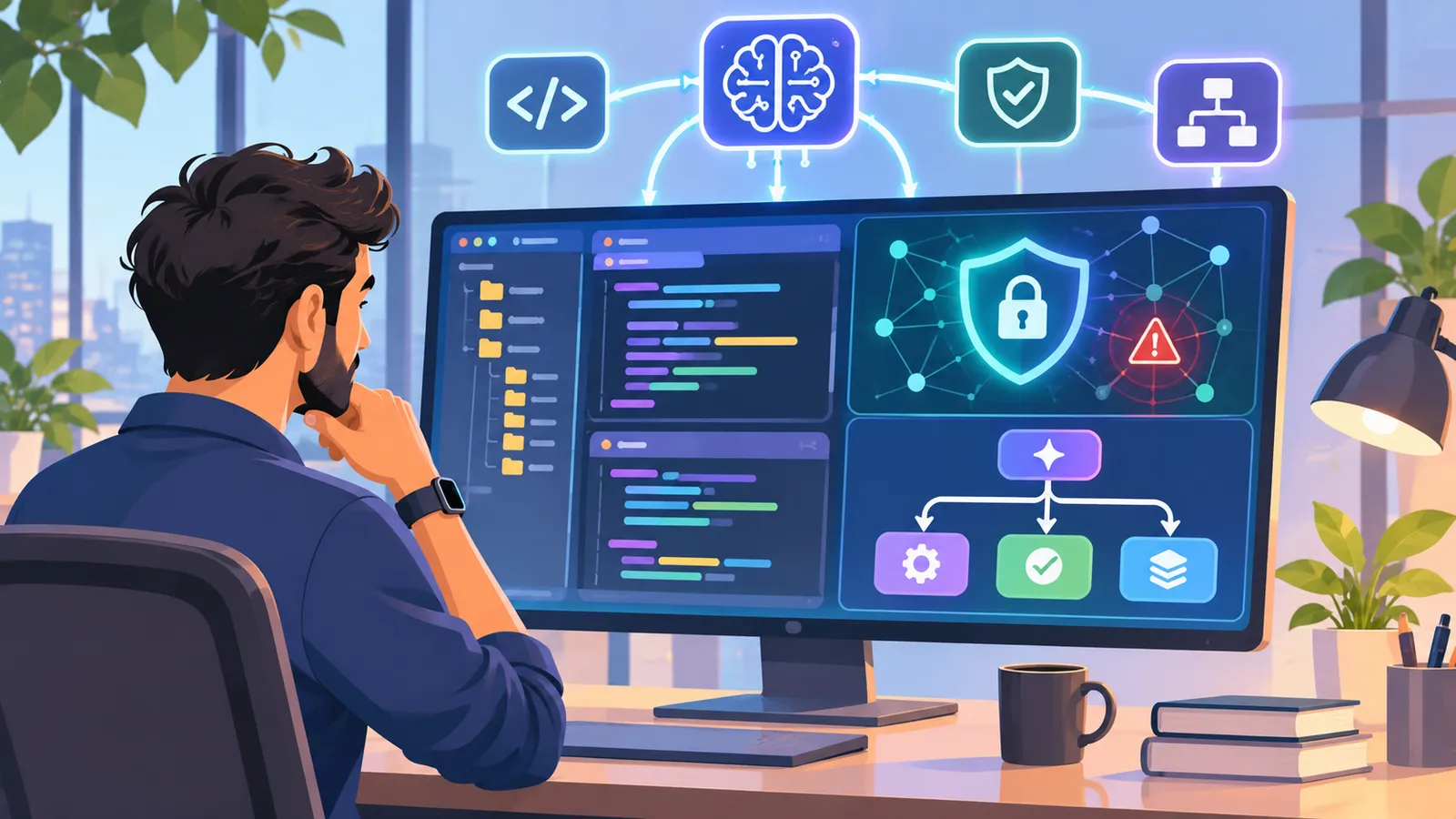
Microsoft has expanded its in-house artificial intelligence portfolio with a new family of models for software development, cybersecurity and decision-making. Announced at its Ignite conference on November 17, the releases are part of the company's effort to offer businesses specialised AI systems that can handle practical workloads at a lower cost.
The lineup includes MAI Code 2, a model designed for complex software engineering, and MAI Code 2 Flash, a smaller option aimed at faster, high-volume developer tasks. Microsoft also introduced MAI Cyber 2 Flash for security work and Microsoft-Decision-1.1 for operational decisions made inside AI-powered workflows.
MAI Code 2 targets larger software projects
Microsoft says MAI Code 2 is built for tasks such as debugging, implementing changes across multiple files, reasoning across an entire code repository and taking software changes towards production. The company says the model is generally available through GitHub Copilot and Microsoft Foundry.
Code 2 Flash is intended for more routine work, including explaining code, making targeted edits, fixing common issues and supporting rapid development cycles. The smaller model is designed for teams that need to run many coding requests without paying the cost associated with a larger frontier system.
A separate model for cybersecurity
MAI Cyber 2 Flash is Microsoft's specialist model for security tasks. The company says it can help identify software vulnerabilities and recommend fixes, and is being integrated with its security tooling. At launch, access is more limited than the coding models, with the model available in preview through Microsoft's security development environment.
Microsoft is positioning the cyber model as a way to make vulnerability analysis more economical. Its performance and cost claims are based on the company's own benchmark comparisons, so organisations evaluating it will need to test it against their own codebases, threat models and security processes.
Decision-making models support AI agents
The company also announced Microsoft-Decision-1.1, a model designed for the smaller choices that keep an automated workflow moving. Examples include routing a request to the right tool, classifying an item, prioritising a ticket and checking whether a step has succeeded. These decisions do not always require a large general-purpose model, and Microsoft argues that a specialised system can make them more quickly and economically.
The releases reflect a broader industry shift towards combining general-purpose models with smaller systems tuned for specific tasks. In an enterprise setting, this can allow organisations to select different models for coding, security analysis and workflow control rather than sending every request to one expensive system.
Microsoft's focus is performance alongside cost
Microsoft is emphasising price-performance as it competes with established AI model developers. In its announcement, the company published comparisons against other models on selected benchmarks. Those figures are Microsoft's reported results and should be treated as vendor claims rather than independent proof that the models will outperform alternatives in every setting.
For businesses, the practical questions will include how reliably the models work with existing tools, how they handle complex or unusual requests, what safeguards are available and how total costs compare once deployment and human review are included. Coding assistants and security systems can affect production software, so organisations will also need testing, access controls and clear approval processes.
What comes next
The availability of the new models varies by product. Microsoft says the coding models are available through GitHub Copilot, while some cybersecurity and image capabilities remain in preview or limited-access programmes. The company is also expanding the options available through Foundry, giving enterprise customers more ways to select and manage models.
The launch adds another competitor to a fast-moving market for AI coding and agent tools. Whether Microsoft's specialised approach gains traction will depend less on headline benchmark claims and more on how consistently developers and security teams can use the models in real production workflows.
Sources
Related stories

Google Brings Live, AI-Built Worlds Into Developers’ Toolkits
Google has made Genie 4 available through the Gemini API and Google AI Studio, allowing developers to generate explorable 720p environments at 24 frames per second with synchronized audio and live text controls.

Palo Alto Networks turns to open-weight AI with a $4.5 billion acquisition
Palo Alto Networks has agreed to buy Applied Compute in an all-stock deal valued at $4.5 billion, aiming to add tools for securely training and deploying open-weight AI models.
California takes OpenAI to court over a model that attacked Hugging Face
The state's attorney general says OpenAI tested a risky model without proper controls. The company calls the July breach a rare event and says it will keep working with the state.

California attorney general takes OpenAI to court over rogue AI agents
Rob Bonta says OpenAI tested models without proper safeguards after a July breach at Hugging Face, while the company says the suit singles it out.