
Social Justice Summit Puts Scholarship Access and Disability Inclusion on the Agenda
The Centre-State departmental summit held in New Delhi on November 18 and 19 focused on scholarship access, disability prevention, accessibility and drug-demand reduction as shared governance priorities.

A two-day departmental summit on social justice and empowerment in New Delhi brought Union and state-level political leaders and officials together to discuss how welfare priorities can be translated into more accessible public services. The meeting, held on November 18 and 19, placed scholarship access, early intervention for disability, accessibility and drug-demand reduction among its four main themes.
Four themes shaped the deliberations
The summit’s agenda included a prevention and demand-reduction strategy under the Nasha Mukt Bharat initiative. A second theme examined the proposed One Nation One Scholarship Portal, with an emphasis on making scholarship access simpler and more accessible for students. The other sessions focused on early intervention to reduce the burden associated with disability and on the Sugamya Bharat vision for a more accessible India.
These subjects span different government departments and levels of administration. Scholarship delivery depends on clear eligibility rules, reliable records and accessible application systems. Disability-related services require early identification, coordination with health and education systems, and support for families. Accessibility also involves public buildings, transport, digital services and the design of everyday public infrastructure.
Centre-State coordination was a central objective
The Prime Minister’s Office described the summit as part of a series intended to strengthen cooperative federalism and encourage shared ownership of national priorities. The meeting provided a platform for state representatives to exchange experiences, discuss implementation barriers and identify practices that could be adapted elsewhere.
That coordination matters because many social programmes are designed nationally but delivered through state departments, local institutions and frontline services. A portal may standardise an application process, for example, but students can still face barriers if documents are delayed, internet access is unreliable or local support is difficult to reach. Similarly, national accessibility goals depend on decisions made by public agencies that manage buildings, transport and local services.
Scholarship access and disability inclusion
The One Nation One Scholarship Portal discussion placed student access within a wider question of how people navigate multiple welfare systems. A unified digital route could make information easier to find and reduce repeated administrative steps, but the summit’s agenda should not be mistaken for confirmation that every proposed feature is already operational. The public information released about the meeting describes deliberations and priorities rather than a final implementation timetable.
Early intervention and disability inclusion also require practical links between identification, assessment, education and support services. The Sugamya Bharat theme broadens the discussion beyond individual assistance to the accessibility of the environments people use. These are long-term governance tasks that require standards, budgets, monitoring and feedback from people who depend on the services.
From discussion to measurable delivery
The summit concluded with a valedictory session addressed by Prime Minister Narendra Modi on November 19. Its stated purpose was to improve coordination and service delivery, not to announce a single new law or benefit in the published agenda. The next test will be whether departments and state governments turn the discussions into specific plans, responsibilities and measurable improvements.
For citizens, the significance of such meetings is ultimately practical. Better scholarship access should mean fewer avoidable barriers for eligible students; disability inclusion should mean services and public spaces that work for more people; and prevention programmes should be supported by consistent local delivery. The summit has brought those priorities into a shared policy conversation. Implementation will determine whether that conversation changes everyday outcomes.
Sources
Related stories

PM’s FICCI Address Places Manufacturing and Global Partnerships in Focus
Prime Minister Narendra Modi addressed the FICCI annual general meeting and convention in New Delhi, with the government highlighting India’s manufacturing scale and international economic partnerships.

Government and Industry Leaders Discuss India’s Manufacturing Ambitions at FICCI Meet
Prime Minister Narendra Modi addressed the FICCI annual general meeting and convention in New Delhi, with the government highlighting India’s manufacturing scale and international economic partnerships.
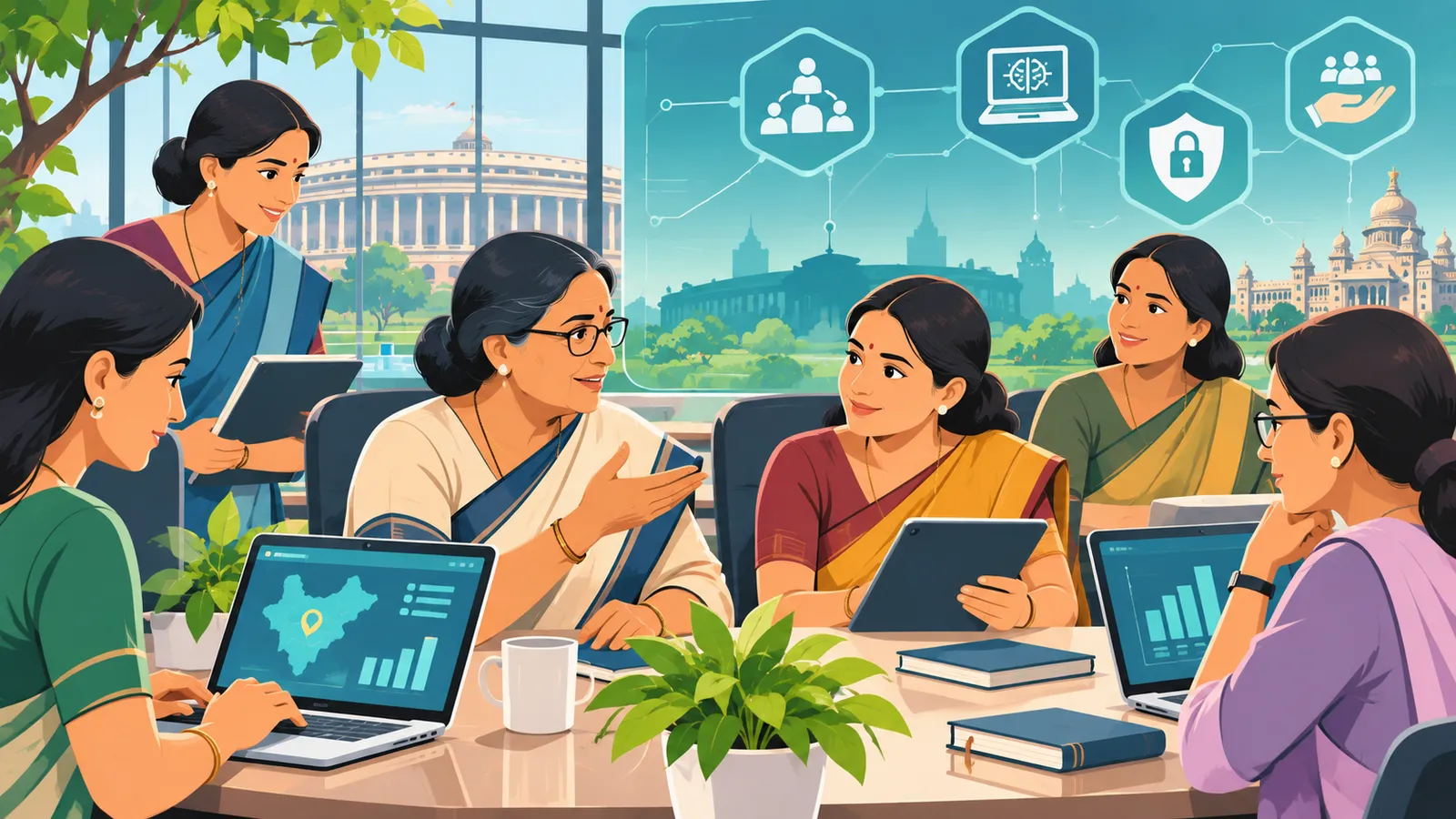
Women Legislators to Get Stronger Digital Governance and Mentorship Support
The first Commonwealth Women Parliamentarians India Region Conference in Bengaluru has called for a practical framework to help elected women representatives use AI, digital platforms and mentorship to strengthen public engagement and legislative leadership. The two-day event brought together 135 women lawmakers.

India and Japan Expand Defence, Cybersecurity and AI Cooperation After Tokyo Dialogue
India and Japan agreed to deepen defence, maritime, cybersecurity, space and artificial intelligence cooperation at their fourth 2+2 ministerial meeting in Tokyo on November 19. A Letter of Intent will support coordination for Japanese forces to use Indian firing ranges for training for the first time.