
Tesorai raises $5.3 million to make overlooked laboratory data more useful
Life-sciences AI startup Tesorai has raised a $5.3 million seed round to expand its tools for searching and analysing raw experimental data from new and archived research.
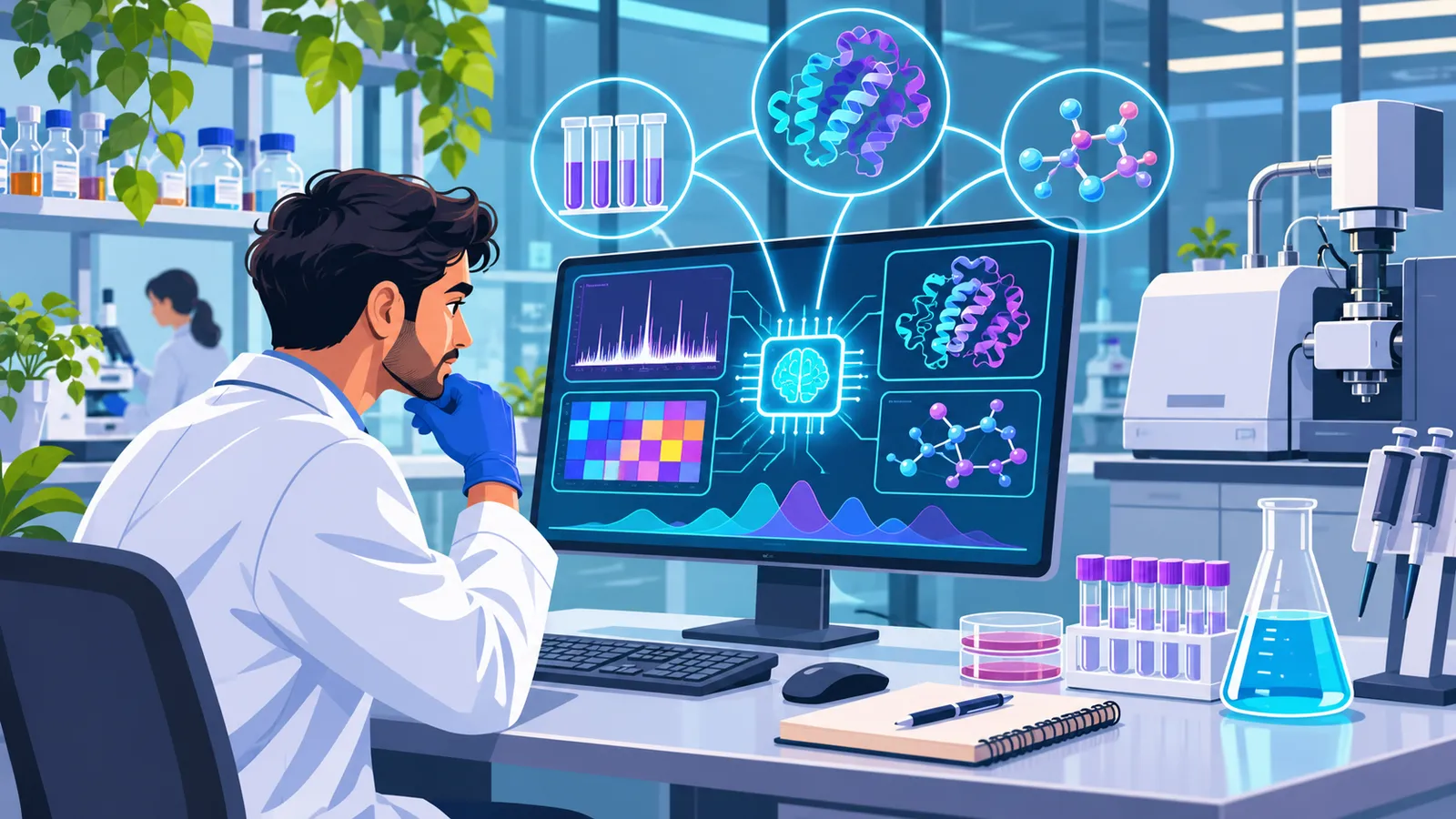
San Diego-based life-sciences AI startup Tesorai has raised $5.3 million in seed funding to expand a platform that helps researchers search and analyse raw experimental data. The company announced the round on November 18, saying the new capital will support work with biopharmaceutical and research customers, partnerships across the life-sciences tools industry and expansion beyond protein data into other molecular information.
The round brings Tesorai's reported total funding to $8 million. Investors include Perplexity Fund, IQT, South Central Ventures, New Stack Ventures, NextGen Venture Partners, f7 Ventures, VitalStage Ventures and ZAKA. The company did not disclose a valuation or identify a lead investor in its announcement.
The problem Tesorai wants to solve
Scientific experiments often produce far more information than appears in the paper that eventually reports their findings. Raw files may remain in institutional archives, public repositories or company databases, stored in different formats and processed using different methods. That can make it difficult for researchers to compare results across studies or revisit data when new questions arise.
Tesorai's approach is to work with the underlying experimental data rather than only indexing published papers or collecting existing analyses. Its platform is designed to harmonise results from new and historical experiments so scientists can search and compare evidence that may not have been highlighted in the original publication.
The company's products include Tesorai Search, which processes raw mass-spectrometry data; Tesorai Trove, a catalogue of curated public proteomics datasets; and Tesorai Chat, which allows researchers to run downstream analyses through conversational prompts. The company says its technology can process large collections of files in hours, although those performance claims are company-reported and will need to be assessed across a broader range of customers and datasets.
What the new funding will support
Tesorai says it plans to use the seed capital to expand work with biopharmaceutical companies and research organisations, build partnerships with companies that provide life-sciences tools and extend its platform beyond proteins. That expansion could broaden the range of experiments researchers can search and compare.
The investors are backing a data-infrastructure approach to AI in biology. Many AI drug-discovery companies focus on developing models that predict molecular behaviour or help design new candidates. Tesorai is targeting a related bottleneck: making existing experimental evidence easier to access and reuse. If the platform can help researchers extract more information from work already completed, it could complement efforts to generate new datasets.
A research example, with an important caveat
Tesorai has highlighted an analysis in which its team reprocessed raw files from five publicly available brain studies and recovered p-tau217, a protein marker associated with Alzheimer's research, that the original studies had not reported. The company said the work was shared as a preprint. A preprint is not the same as a peer-reviewed clinical finding, and the result should be treated as an example of the company's method rather than proof that its platform has changed diagnosis or treatment.
The distinction matters because life-sciences research requires careful validation. Reprocessing an old dataset can reveal a signal worth investigating, but scientists still need to check the methods, reproduce the result and establish whether it is meaningful in a new study or clinical setting. The value of the platform will depend on whether independent researchers can confirm that it improves the quality and efficiency of their work.
Competition and the next stage
The startup was founded by former Google and Verily colleagues Melissa Miao, Peter Cimermancic and Charlie Kim. The founders bring experience in business development, AI and molecular science, according to the company's announcement. Tesorai also says it has collaborated with research organisations including MD Anderson Cancer Center, NYU and the Michael J. Fox Foundation.
Those relationships may help the company test its tools in demanding research environments, but they do not by themselves establish broad market adoption. Tesorai will need to show that customers can integrate the platform into existing workflows, that its outputs are reproducible and that the cost of processing archived data is justified by the insights recovered.
The seed round gives the company more resources to pursue that goal. Its next test will be whether it can turn the promise of searchable experimental data into a service that researchers use regularly, and whether expanding into other molecular datasets can make the platform valuable across a wider range of life-sciences work.
Sources
Related stories

Noida Set to Host Uttar Pradesh’s New ₹281-Crore Research and Innovation Centre
Uttar Pradesh has approved a ₹281.03-crore Deep Tech U-Hub at IIT Kanpur’s Noida campus. The EPC-mode building is targeted for completion in 24 months, with ₹100 crore provided in the 2026–27 budget and the remaining funding to be arranged in phases.

National Startup Awards 6.0 Applications Close Today, November 20
The Department for Promotion of Industry and Internal Trade has set November 20 as the final date for applications to National Startup Awards 6.0. The edition recognises startups across 20 sectoral categories and three special categories, with eligible winners in startup-focused categories set to receive ₹25 lakh each.

Oura to buy AI primary-care firm Counsel Health for $625M
Smart ring maker Oura said it will acquire Counsel Health, an AI-native primary care company, for $625 million, weeks after shelving its IPO.
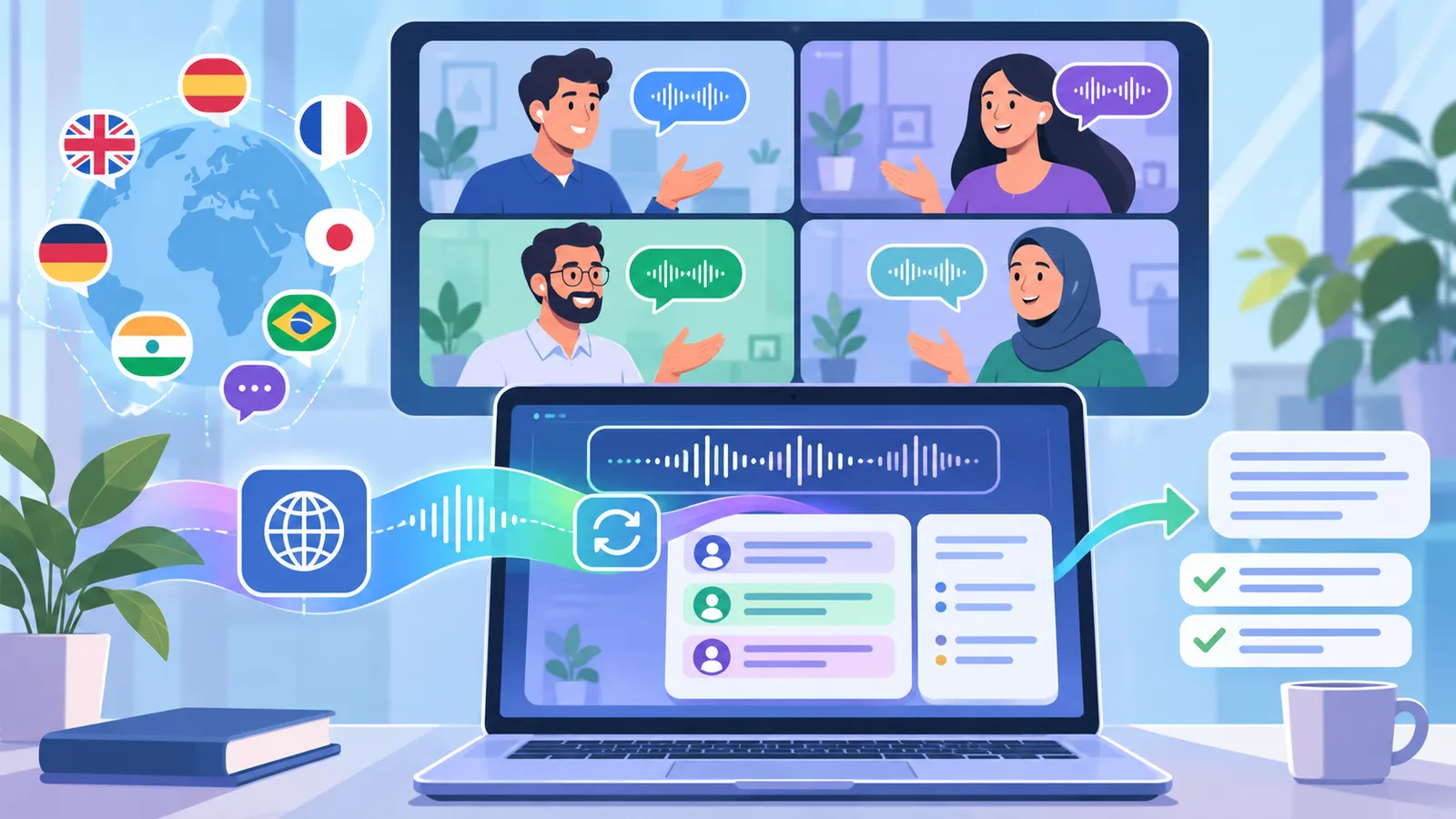
Otter AI adds 27 languages and mid-call switching
Otter.ai is adding 27 languages, taking it to 31, and plans a feature that follows meetings when speakers switch languages, TechCrunch reports.