
Dust Grains From Earth’s Upper Atmosphere Point to Ancient Kuiper Belt Ice
NASA researchers analysed 12 tiny dust particles collected from Earth's stratosphere and found mineral and oxygen-isotope signatures consistent with ancient water in the Kuiper Belt. The findings offer clues to how material was distributed in the early solar system.
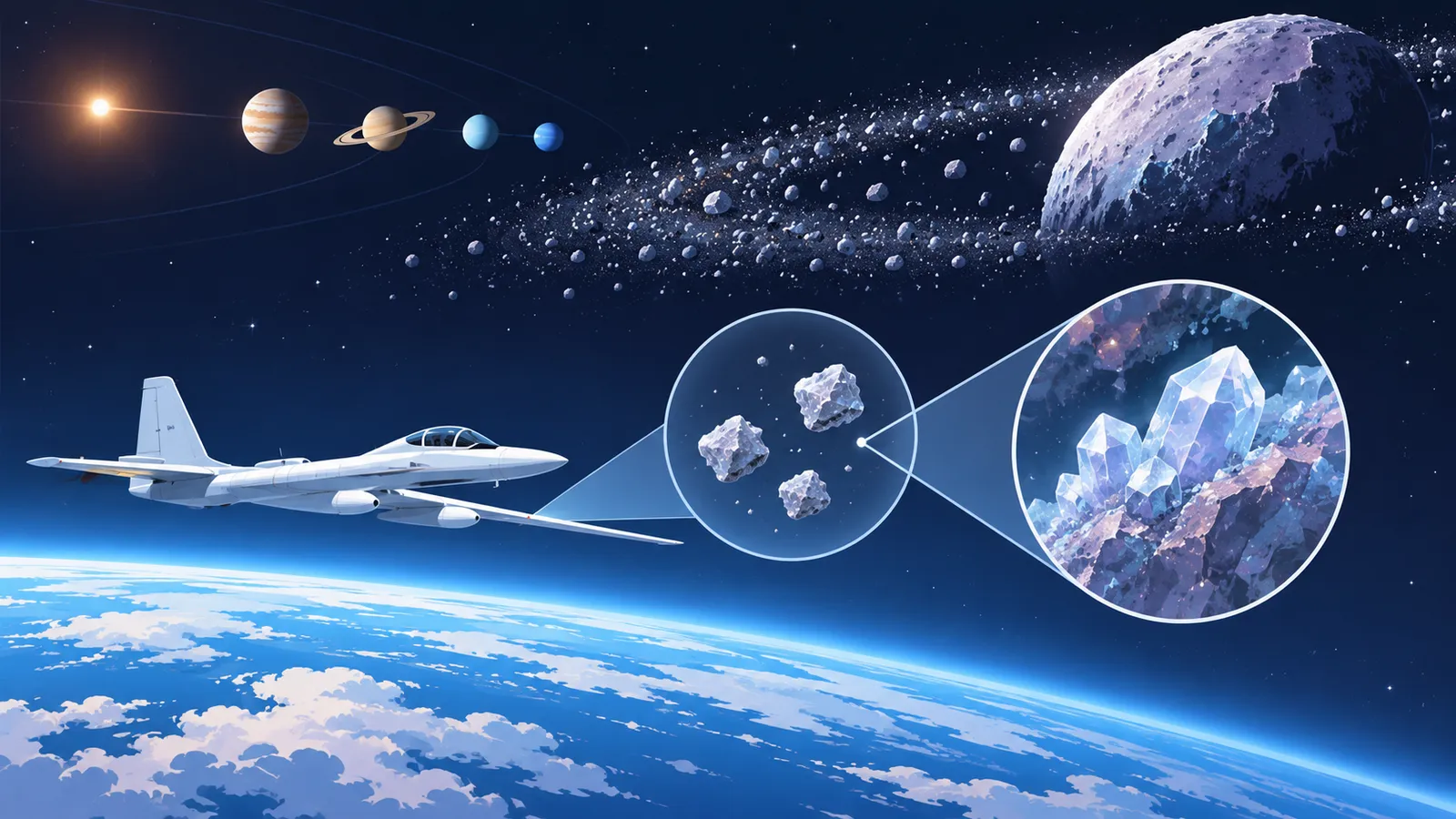
Tiny particles of dust collected high above Earth have given NASA scientists new evidence about the chemistry of the distant Kuiper Belt, a region of icy bodies beyond Neptune. In a study described by NASA on November 18, researchers found mineral and oxygen-isotope signatures in the grains that point to an ancient reservoir of water enriched in heavier oxygen isotopes, offering a new way to investigate how material moved through the early solar system.
The team at NASA's Johnson Space Center analysed 12 dust particles collected from Earth's stratosphere by the agency's ER-2 high-altitude research aircraft. The particles contained tracks left by energetic particles from the Sun, which helped researchers trace their likely origins to the Kuiper Belt. The study was carried out with colleagues at the University of California, Los Angeles.
Reading a distant history in tiny grains
The Kuiper Belt is a broad region beyond Neptune that contains icy remnants from the formation of the solar system. Because these objects preserve material from the system's early history, their composition can help scientists reconstruct the conditions in which planets and smaller bodies formed. Directly collecting samples from this distant region is difficult, so particles that reach Earth's atmosphere can provide an indirect source of information.
NASA said researchers used advanced electron microscopy at the agency and an ion microprobe at UCLA to examine the particles' minerals and oxygen-isotope composition. They identified minerals that form when water interacts with dust. The chemical signatures indicated that the water involved in those early processes was enriched in heavier oxygen isotopes.
Why oxygen isotopes matter
Oxygen occurs in different isotopic forms, which have the same number of protons but different numbers of neutrons. Measuring the relative abundance of these forms can preserve clues about where material originated and the processes it experienced. In this case, the isotope pattern in the minerals provided evidence consistent with water from a cold, distant region of the early solar system.
The researchers compared their measurements with reference information from NASA's Genesis mission, which collected solar-wind samples to help establish the Sun's isotopic composition. NASA said the scarcity of similar signatures in meteorites is also significant: it suggests that the giant planets may have limited the mixing of material between the outer and inner solar system.
How the particles were traced
The particles were not simply assumed to have come from beyond Neptune because of their chemistry. Researchers also examined tracks produced by solar energetic particles. Those tracks supplied information that helped connect the grains to the Kuiper Belt, strengthening the interpretation that the material originated in the outer solar system.
Collecting the dust required a high-altitude aircraft because Earth's lower atmosphere contains large amounts of ordinary terrestrial material that can complicate the study of rare extraterrestrial particles. The ER-2 aircraft operates in the stratosphere, where specialised collection methods can capture tiny particles before they descend into the denser atmosphere.
What the discovery tells scientists
The findings add evidence to a long-standing idea that water-rich material with distinctive oxygen-isotope characteristics existed in the outer solar system. Earlier clues came from meteorites and samples returned from carbon-rich asteroids, but NASA said the evidence had remained limited. The new analysis offers another line of evidence from particles whose origin can be linked to the Kuiper Belt.
Understanding how water and dust were distributed matters because planets formed from material that was transported and mixed across the young solar system. The giant planets may have acted as barriers or altered pathways for that movement, helping preserve differences between the inner and outer regions. The isotope signatures provide researchers with a way to test models of that early rearrangement.
What remains uncertain
The study does not mean scientists have directly sampled an icy Kuiper Belt object, nor does it establish the exact history of every grain in the collection. The conclusion is based on a small set of particles, their mineral chemistry, isotope measurements and evidence used to infer their origin. Further observations and analyses will be important for understanding how widespread this material is and how it relates to other samples from the solar system.
For now, the work demonstrates how microscopic dust collected near Earth can preserve chemical records from extremely distant parts of the solar system. By combining particle collection, laboratory analysis and comparisons with spacecraft measurements, researchers are extending the study of planetary origins without having to send a spacecraft to every region where ancient material remains.
Sources
Related stories

India and EU finish Horizon Europe talks, opening a path to direct research funding
India and the European Union have concluded negotiations on India's association with Horizon Europe, but researchers will gain access to the new funding arrangements only after the agreement is signed and procedures are completed.
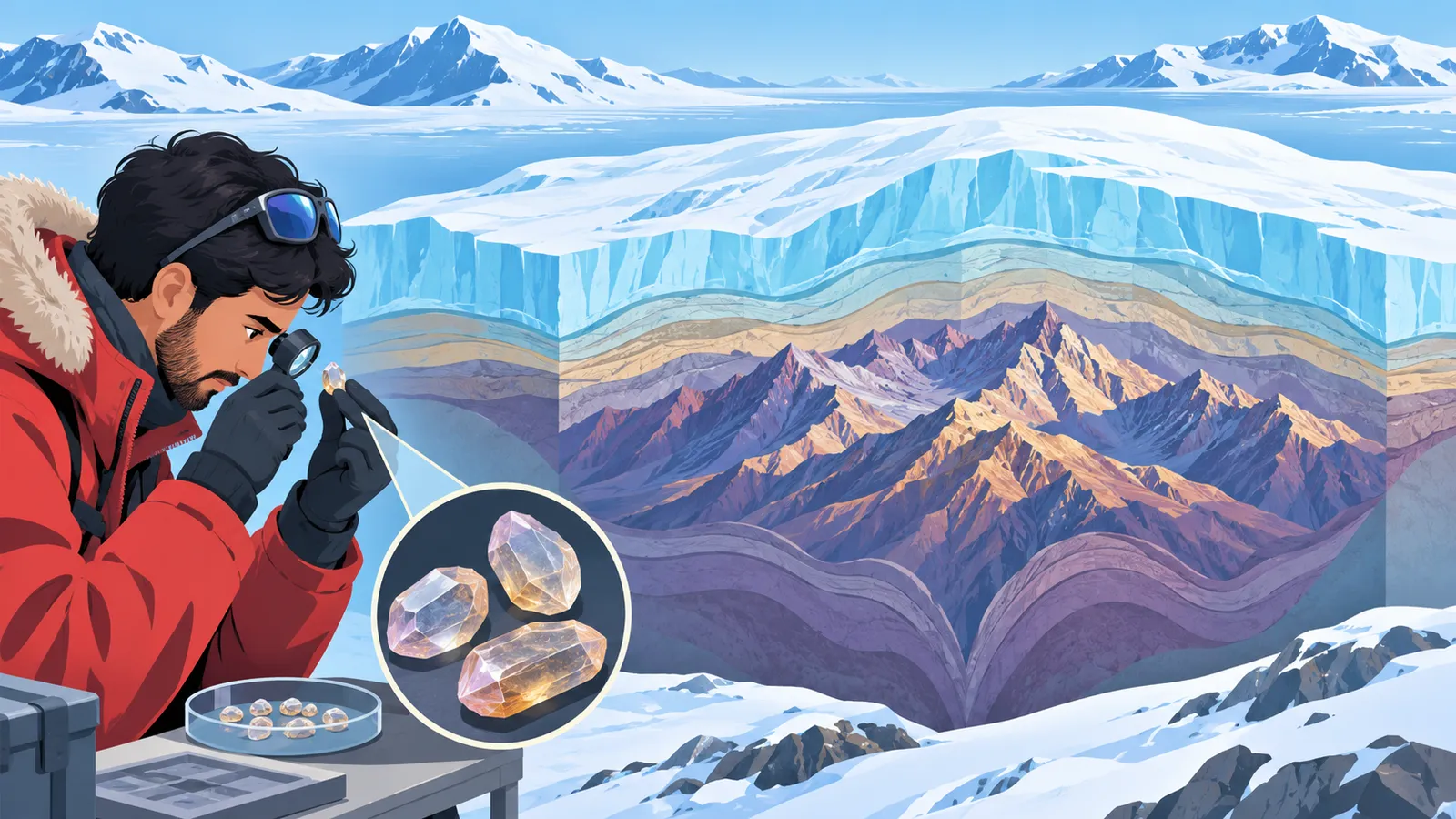
Tiny crystals point to an ancient mountain system hidden beneath Antarctic ice
Researchers analysed 1,712 zircon grains from Antarctic sediments and found evidence of Himalayan-scale mountain building during Gondwana's formation, with possible links to ancient ocean chemistry.

India Unveils Indigenous H5N1 Vaccine for Poultry After Bhopal Trials
India has unveiled an inactivated H5N1 vaccine developed by ICAR-NIHSAD in Bhopal for chickens. The vaccine targets clade 2.3.2.1a, and institute-reported trials found protection lasting up to six months, although wider rollout arrangements have not yet been detailed.

India Prepares to Unveil Indigenous H5N1 Vaccine for Chickens
India is set to dedicate its first home-developed inactivated H5N1 vaccine for chickens on November 20. Developed by ICAR-NIHSAD in Bhopal, it targets the Clade 2.3.2.1a strain linked to many poultry outbreaks.