
South Korea Crosses $1 Trillion Export Mark as AI Chip Demand Surges
South Korea’s cumulative exports passed $1 trillion on November 19, making it the fourth economy to reach the milestone, with semiconductor shipments providing the largest boost.
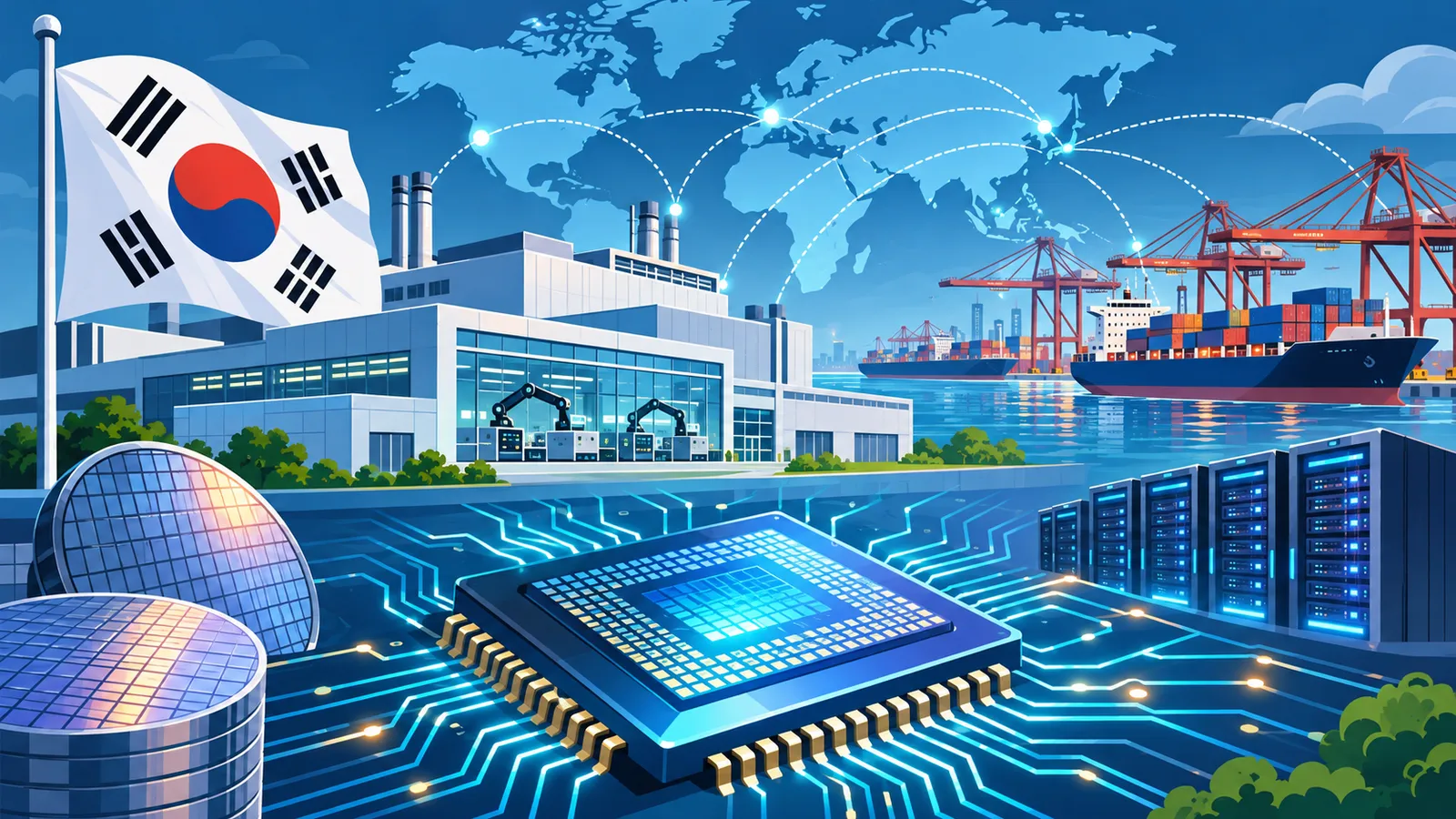
South Korea’s cumulative exports crossed the $1 trillion mark on November 19 for the first time, placing the country among a small group of economies to reach the milestone. The Ministry of Trade, Industry and Resources said the threshold was passed at 2:09 p.m. local time, with shipments of semiconductors and computer-related products providing a major share of the increase.
A new milestone for an export-led economy
South Korea became the fourth country to record more than $1 trillion in annual exports, after Germany, the United States and China. The milestone came more than a month before the end of 2026, following a year in which cumulative exports had already moved beyond the previous full-year record. The country’s export base spans electronics, vehicles, ships, petrochemicals, steel, cosmetics and pharmaceuticals.
The Ministry of Trade, Industry and Resources attributed much of the recent acceleration to stronger demand for semiconductors and computers as global technology companies increased investment in artificial intelligence infrastructure. Yonhap reported that semiconductor exports reached about $397 billion in the January-to-October period, accounting for roughly 43% of total shipments over those months.
AI infrastructure drives chip shipments
Memory chips are a key input for data centres and other computing infrastructure. The expansion of AI services has increased demand for high-performance processors, memory and storage, supporting South Korean suppliers. Higher memory-chip prices have also lifted the value of shipments, meaning the increase reflects both demand and pricing conditions.
The export surge has not been limited to chips. Yonhap reported gains in computers and several other categories, including cosmetics and pharmaceuticals. Exports to major markets such as the United States, China, Japan and Southeast Asia remained strong, while shipments to emerging markets also increased. That wider reach suggests that South Korea’s trade performance continues to rely on a broad industrial and consumer-goods base, even as semiconductors take a larger share.
Growth is uneven across industries
The headline milestone does not mean every export sector is expanding at the same pace. Reuters noted that automobiles, steel and shipbuilding have faced more difficult conditions than the semiconductor sector. The concentration of growth in chips creates exposure to shifts in technology spending, memory prices and trade policy. If global data-centre investment slows, the effect could be felt across suppliers and the wider export economy.
South Korean officials have said the government will support major industries and develop future growth areas such as AI and biotechnology. President Lee Jae Myung has also emphasised the need for export gains to benefit workers, smaller companies and regions outside the main industrial centres. Turning strong trade figures into wider domestic gains will require investment, skills development and stable business conditions.
The next challenge is sustaining momentum
Crossing $1 trillion is a significant measure of the scale South Korea has achieved in global trade, but it is not a guarantee of future growth. The country must manage its dependence on semiconductors while strengthening the competitiveness of other sectors. Businesses will also have to navigate changing demand, currency movements and restrictions that can affect cross-border supply chains.
The record demonstrates how closely the global AI investment cycle is now linked to manufacturing and international trade. South Korea’s next task is to make that momentum durable, ensuring that the benefits extend beyond a single technology cycle and support a more balanced export economy.
Sources
Related stories

EU and UK Leaders Meet in Brussels to Advance Post-Brexit Cooperation
The second EU–UK summit is set to review progress on trade, energy, transport and security cooperation as both sides seek a more practical working relationship.

UK and EU Move Closer to Post-Brexit Reset as Brussels Summit Opens
Britain and the European Union are seeking agreements on food trade, carbon-market links and a capped youth mobility scheme at their November 20 summit in Brussels. Disputes over university fees and regulatory alignment remain unresolved.
India and Sweden move LeadIT into an implementation-focused climate phase
LeadIT 3.0, launched at COP31, will shift the India-Sweden industrial transition initiative towards larger projects, investment mobilisation and practical support for heavy industry from 2027 to 2030.
APEC Leaders Set Out Shenzhen Priorities for Trade and Supply Chains
The 21 APEC economies have agreed on a Shenzhen outcome framework focused on resilient supply chains, digital trade, connectivity and innovation, as regional governments seek steadier growth amid economic uncertainty.